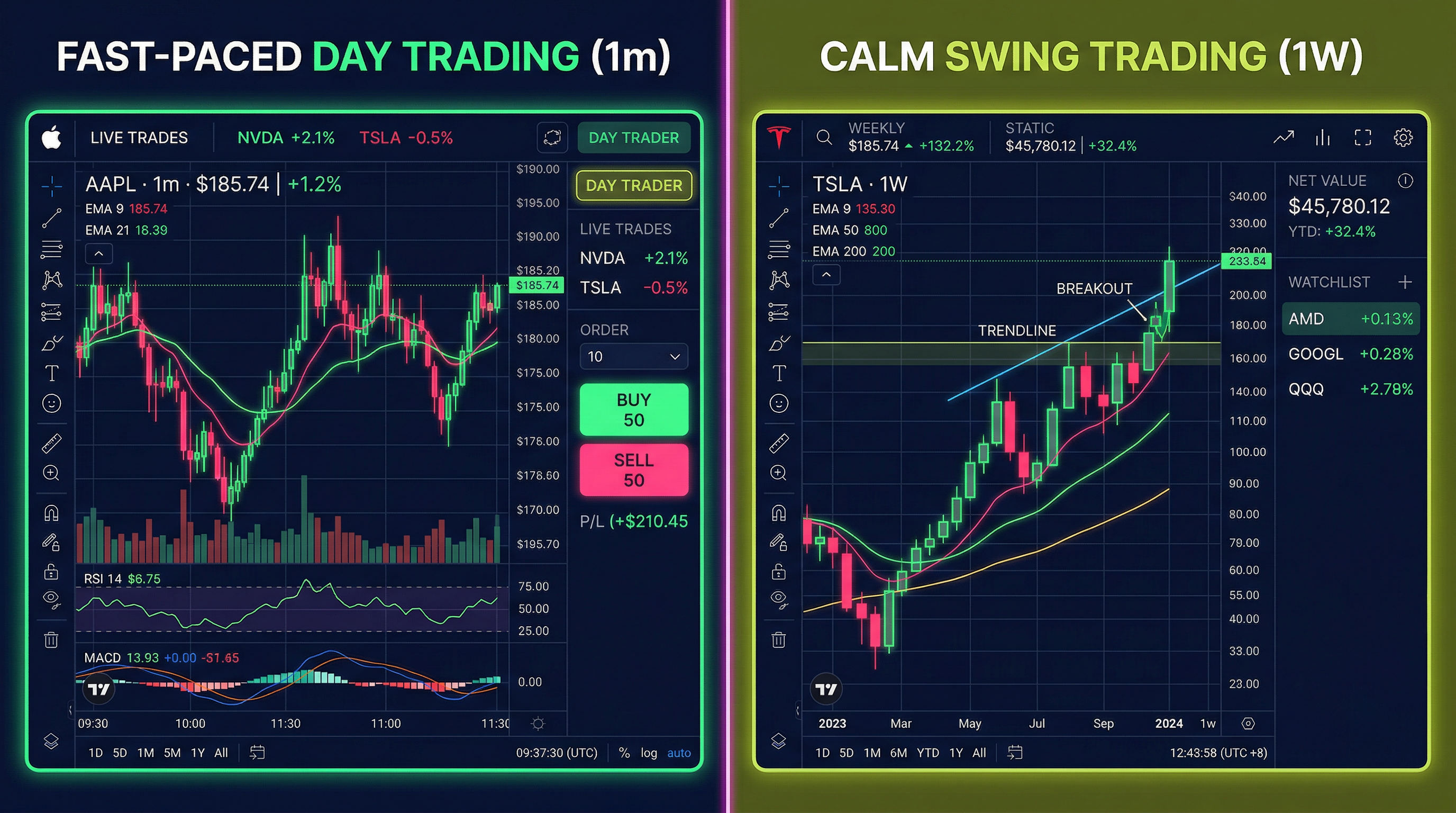
تسعون يومًا. أسلوبان في التداول. تجربة قاسية بصراحة تامة. أمضيت ثلاثة أشهر أجرّب التداول اليومي وتداول التأرجح بجدية، أتتبع كل صفقة وكل ساعة أمام الشاشة وكل دولار ربحته أو خسرته. كانت النتائج مفاجئة — وقد تُفاجئك أنت أيضًا، خاصةً إذا كنت تعتقد أن التداول اليومي هو الطريقة «الحقيقية» لكسب المال في الأسواق.
الإجابة الصريحة عن أيّ الأسلوبين أفضل؟ تعتمد كليًا على حياتك وشخصيتك وما تريده من التداول فعلًا. لكن بعد أن عشت كليهما، لديّ آراء قوية جدًا. دعني أفصّل كل شيء.
الفارق الجوهري: الأُفق الزمني وتأثيره على نمط الحياة
التداول اليومي يعني فتح وإغلاق جميع المراكز في اليوم نفسه. لا احتفاظ بمراكز بين عشية وضحاها أبدًا. حياتك التداولية بأكملها تجري بين 9:30 صباحًا و4:00 مساءً بتوقيت الشرق الأمريكي، وأكثر النوافذ تقلبًا (وربحًا) هي الساعة الأولى وآخر 30 دقيقة.
تداول التأرجح يعني الاحتفاظ بمراكز لمدة 2–10 أيام (أحيانًا بضعة أسابيع)، لالتقاط تحركات أسعار متعددة الأيام الأكبر. تُجري تحليلك في المساء وعطلة نهاية الأسبوع وتضع الأوامر، ثم تتابع الأمر بضع مرات يوميًا. جدولك لا يُستهلك بالسوق.
يوم في حياة: المتداول اليومي
خلال شهري في التداول اليومي، كان منبهي مضبوطًا على 8:30 صباحًا. فحص ما قبل السوق حتى 9:15. تأهب قصوى خلال الافتتاح حتى 11 صباحًا. الغداء مع متابعة المخططات. موجة تركيز أخرى من الساعة 3 إلى 4 مساءً. بحلول دقة إغلاق السوق، كنت منهكًا ذهنيًا — ولم يكن يومًا مربحًا بشكل خاص. كنت في الأساس أؤدي وظيفةً بدوام كامل وإجهاد شديد براتب غير منتظم.
يوم في حياة: متداول التأرجح
خلال شهري في تداول التأرجح، كنت أُجري تحليلًا كل مساء لمدة 45–60 دقيقة. أضع تنبيهات على Traderise لقائمة مراقبتي. أتابع لمدة 10–15 دقيقة عند افتتاح السوق وإغلاقه. انتهى الأمر. استعدت يومي كله. وبطريقة ما، كان أرباحي وخسائري لشهر تداول التأرجح أفضل.
الإحصاءات الحقيقية التي لا يُريك إياها أحد
دعنا نتحدث بالأرقام، لأن هنا عادةً تُصبح المحادثة غير مريحة لأنصار التداول اليومي.
معدلات ربح التداول اليومي قاسية
وجدت دراسات أكاديمية متعددة، من بينها أبحاث نشرها اقتصاديون ماليون في UC Davis وUC Berkeley، أن نحو 70–80% من المتداولين اليوميين يخسرون. وجدت دراسة عام 2020 حول المتداولين اليوميين في البرازيل أن 97% ممن جرّبوا التداول اليومي لأكثر من 300 يوم خسروا. هذه ليست إحصاءات انتقائية — بل متسقة عبر أسواق وفترات زمنية متعددة.
لا يعني هذا أن التداول اليومي مستحيل الربح. يعني أن سقف المهارة مرتفع بشكل استثنائي، ومنحنى التعلم مكلف.
أرقام تداول التأرجح أكثر تسامحًا
لتداول التأرجح حلقة تغذية راجعة أطول، مما يعني أن أخطاءك لا تتراكم بالسرعة نفسها. تُجري 3–5 صفقات أسبوعيًا بدلًا من 15–30. كل صفقة أكثر بحثًا. تميل معدلات الربح للمبتدئين المنضبطين إلى أن تكون أفضل من التداول اليومي، والعبء النفسي أقل بكثير.
قبل اختيار أسلوب تداول بأموال حقيقية، تداول تجريبيًا بكلا الأسلوبين لمدة 30 يومًا لكل منهما على منصة كـ Traderise. ستخبرك نتائجك المحاكاة بأيّ الأسلوبين تناسبه شخصيتك فعلًا — قبل أن يمنحك السوق الإجابة بطريقة مكلفة.
6 عوامل لمساعدتك على اختيار أسلوبك
العامل الأول: كم من الوقت لديك؟
يتطلب التداول اليومي 4–6 ساعات من وقت الشاشة النشط خلال ساعات السوق، إضافةً إلى التحضير قبل السوق. إذا كان لديك عمل أو دراسة أو التزامات بين 9:30 صباحًا و4:00 مساءً بتوقيت الشرق الأمريكي، فالتداول اليومي ليس أسلوبك. يمكن إجراء تداول التأرجح في أقل من ساعتين يوميًا، معظمها خارج ساعات السوق.
العامل الثاني: كيف تتعامل مع الضغط؟
التداول اليومي مكثّف. المراكز تتحرك بسرعة. يمكن أن تحدث الخسائر في ثوانٍ. إذا كنت تعاني من أي قلق أو تجد صعوبة في اتخاذ قرارات عاطفية، فسيُضخّم التداول اليومي أسوأ ميولك. تداول التأرجح يمنحك مساحة للتنفس والتفكير.
العامل الثالث: ما وضعك من حيث رأس المال؟
في الولايات المتحدة، ثمة قاعدة Pattern Day Trader (PDT): إذا أجريت 4 صفقات يومية أو أكثر في فترة 5 أيام، فعليك الاحتفاظ بـ 25,000 دولار على الأقل في حسابك. هذا عائق حقيقي. تداول التأرجح لا يخضع لهذا القيد — يمكنك التداول التأرجحي بـ 500 دولار إذا كان هذا ما تملكه.
العامل الرابع: ما نوع شخصيتك؟
هل تحب اتخاذ قرارات سريعة وتشعر بالحيوية من التغذية الراجعة الفورية؟ قد يناسبك التداول اليومي. هل تفضّل التحليل المعمّق والصبر والإجراءات المتأنية؟ تداول التأرجح هو لعبتك. لا يوجد خيار أفضل — إنها أنماط إدراكية مختلفة.
العامل الخامس: ما أهدافك؟
إذا أردت استبدال دخل الوظيفة بالكامل من خلال التداول، فالتداول اليومي هو المسار نظريًا (إذا أتقنته). إذا أردت بناء الثروة مع الحفاظ على حياة طبيعية، فتداول التأرجح أو تداول المراكز أكثر منطقيةً بكثير.
العامل السادس: كيف تتعلم بشكل أفضل؟
يمنحك التداول اليومي تغذية راجعة سريعة — ستعرف خلال ساعات إذا كانت استراتيجيتك تنجح. لتداول التأرجح حلقة تغذية راجعة أبطأ. بعض الناس يتعلمون بشكل أسرع من التكرار السريع. والبعض الآخر يحتاج وقتًا للتأمل. اعرف أسلوبك في التعلم.
تدرّب على هذه الاستراتيجية بدون مخاطرة
Traderise يتيح لك التداول التجريبي بـ 10,000 دولار افتراضية باستخدام بيانات السوق الحقيقية. اختبر كل استراتيجية في هذا المقال قبل المخاطرة بدولار واحد حقيقي.
ابدأ التداول التجريبي مجاناًالتكاليف الخفية للتداول اليومي التي لا يذكرها أحد
حتى بعيدًا عن معدل الفشل المرتفع، للتداول اليومي تكاليف تُدمّر عوائدك بصمت:
العمولات والرسوم: حتى الوسطاء «المجانيون» لديهم تكاليف فروقات. أجرِ 30 صفقة يوميًا وتكاليف المعاملات الفعلية ستتراكم بسرعة.
قاعدة Pattern Day Trader: كما ذُكر، الحد الأدنى البالغ 25,000 دولار قيد حقيقي يدفع كثيرًا من المبتدئين إلى استخدام حسابات الهامش، مما يضيف مخاطر الرافعة المالية.
المعالجة الضريبية: تخضع مكاسب رأس المال قصيرة الأجل (أي مركز محتفظ به أقل من سنة) للضريبة بنسبة دخلك العادي — بالغًا محتملًا 22–37%. تحظى صفقات التأرجح المحتفظ بها أكثر من سنة بمعدل ضريبة مكاسب رأس المال طويل الأجل الأقل بكثير.
تكاليف التكنولوجيا والبيانات: يدفع المتداولون اليوميون المحترفون آلاف الدولارات شهريًا مقابل بيانات Level 2 ومنصات التنفيذ السريع وتدفقات البيانات الموثوقة. المتداولون التجزئة في مأزق هيكلي.
التكلفة الفرصوية لوقتك: إذا كنت تقضي 6 ساعات يوميًا في تعلّم التداول اليومي حين يمكنك تطوير مسيرتك المهنية أو بناء عمل تجاري، فقد يكون الأثر المالي الصافي سلبيًا جدًا حتى لو حققت التعادل في تداولك.
هل يمكنك الجمع بينهما؟ النهج الهجين
نعم، ويفعل ذلك كثير من المتداولين. النهج الهجين: استخدم تداول التأرجح كاستراتيجيتك الأساسية (ثابتة وأقل إجهادًا) وتداول يومي في إعدادات عالية الاقتناع في أيام التقلب الشديد (الأرباح والأحداث الكلية الكبرى). هذا يمنحك مزايا نمط الحياة لتداول التأرجح مع القدرة على التقاط التحركات اليومية السريعة أحيانًا.
إذا تبنّيت النهج الهجين، محاكي Traderise مثالي لممارسة كلا الأسلوبين في آنٍ واحد دون الخلط بين أموال حقيقية في استراتيجيتين مختلفتين تمامًا.
حكمي الصريح بعد 90 يومًا
شهر التداول اليومي: مُجهِد، مستهلك للوقت، نتائج متذبذبة. أجريت بعض الصفقات الرائعة وبعض الصفقات الفظيعة حقًا. النتيجة الصافية كانت سلبية بشكل طفيف، وكنت منهكًا.
شهر تداول التأرجح: أكثر هدوءًا واستراتيجيةً ونتائج أفضل. لم أكن مشدودًا إلى الشاشة. تحليلي كان أكثر عمقًا لأن لديّ وقتًا للقيام به بشكل صحيح. النتيجة الصافية كانت إيجابية بشكل معتدل.
بالنسبة لمعظم الناس الذين لديهم حياة حقيقية — عمل ودراسة وعلاقات — تداول التأرجح هو المسار الأكثر استدامةً وواقعية. التداول اليومي مهنة بدوام كامل تتطلب سنوات من الممارسة المخصصة. إنه ليس طريقًا مختصرًا للأرباح السريعة؛ إنه واحدة من أصعب المهارات المالية في العالم.
توصيتي: ابدأ بتداول التأرجح. تدرّب على Traderise أولًا. ابنِ الأساسيات. إذا أردت لاحقًا استكشاف التداول اليومي، فافعل ذلك من أساس إدارة مخاطر صلب واستراتيجية مثبتة — لا من الصفر مع أموال حقيقية على المحك.
اختبر كلا الأسلوبين قبل الالتزام
Traderise يتيح لك ممارسة التداول اليومي وتداول التأرجح بـ 10,000 دولار افتراضية. اكتشف أيّ الأسلوبين يناسب شخصيتك — قبل أن تكتشف ذلك بالطريقة المكلفة.
جرّب Traderise مجاناً