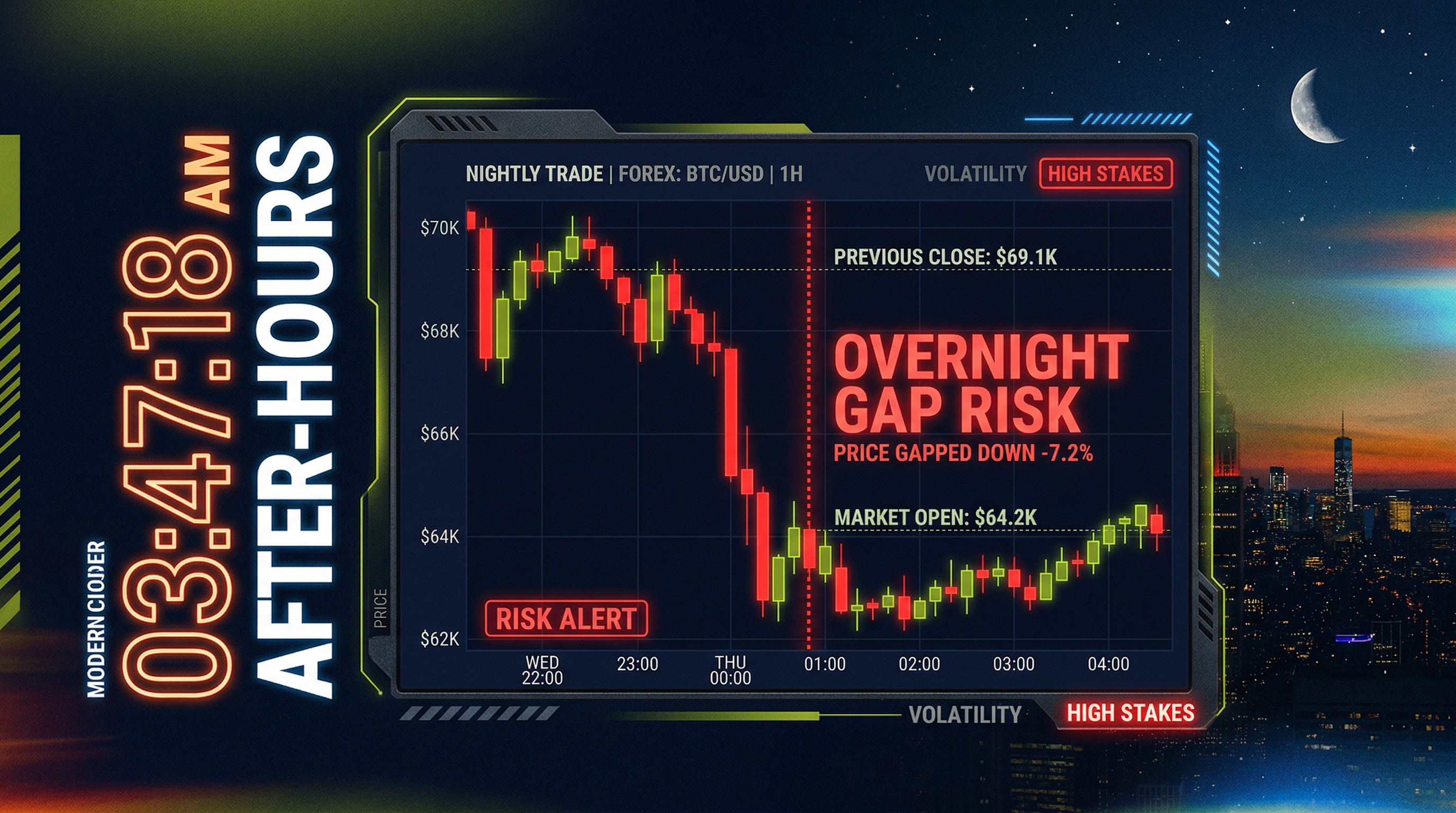
I still remember staring at my phone at 2 AM, watching a position I'd held overnight crater 12% in pre-market. I hadn't set a stop-loss. I didn't have an exit plan. I just vibed into the trade because a TikTok account said the stock was "about to moon." That $800 loss was my tuition fee for swing trading 101 — and honestly, best money I ever lost.
Here's everything I wish I knew before that night. If you're thinking about swing trading, this guide will either save you from my mistake or make you a whole lot more confident doing it right.
What Swing Trading Actually Is (Not the Influencer Version)
Swing trading is holding a stock or other asset for 2 to 10 days, trying to capture one "swing" — a meaningful directional price move. It's the middle ground between day trading (exhausting, all-day screen time) and long-term investing (slow, boring, but actually solid).
Markets don't move in straight lines. They zig-zag. Swing traders try to ride those zigs and zags instead of fighting them. In 2026, with market volatility running higher than pre-pandemic averages, there are more swing trading opportunities than ever — but also more traps for beginners.
Who Should Actually Try Swing Trading
Swing trading is genuinely well-suited for people with a day job, classes, or any schedule that prevents staring at charts for 6 hours straight. You do your analysis in the evening, set your orders, check in a couple times during market hours, and let the trade play out. Compare that to day trading, where missing 20 minutes can cost you serious money.
That said, swing trading is not passive investing. You still need to do real analysis, manage risk actively, and have a plan for every trade before you enter.
The Numbers That Matter
Experienced swing traders typically aim for a risk-reward ratio of at least 1:2 — risking $1 to make $2. Win rates for intermediate traders usually sit between 45–60%, which means you'll lose plenty of trades and still be profitable overall. That math only works if you manage losses tightly, which is why stop-losses aren't optional.
5 Core Concepts You Need to Master First
Before you place a single swing trade, internalize these five concepts. I learned most of them the expensive way.
1. Support and Resistance Are Your Map
Support is a price level where a stock tends to stop falling and bounce. Resistance is where it tends to stop rising and pull back. Swing traders buy near support and sell near resistance. Sounds simple, but identifying these levels accurately on a chart takes practice — and Traderise's chart tools let you draw and test these levels on real historical data without risking money.
2. Trend Direction Is Your Filter
Always trade in the direction of the larger trend. If a stock is in an uptrend on the daily chart, you're looking for long (buy) setups on pullbacks. Going against the trend is how beginners get caught holding a "dip" that becomes a cliff. Use the 20-day and 50-day moving averages as your trend filters — if price is above both, you're in bullish territory.
3. Volume Confirms Everything
A price move without volume is suspicious. When a stock breaks out to a new high on 3x its average daily volume, that's conviction. When it "breaks out" on thin volume, it often reverses fast. Volume is your lie detector.
4. Catalysts Give You an Edge
The best swing trades often have a catalyst — an earnings beat, a product announcement, a sector rotation. Trading pure technicals works, but having a fundamental reason the stock should move gives you more conviction to hold through normal volatility.
5. Your Exit Plan Goes In Before Your Entry
This is the rule I broke the night I lost $800. Know your stop-loss level and your profit target before you buy. If you don't have both figured out, you're not ready to trade — you're ready to gamble.
Every swing trade needs three things decided before you click buy: entry price, stop-loss level, and profit target. If you can't name all three, don't enter. Traderise lets you set all three when you paper trade so you build this habit before real money is involved.
How to Find Swing Trade Setups: A Simple 3-Step System
Here's the system I use now. It's not magic, but it's consistent.
Step 1: Scan for Stocks in Uptrends with Pullbacks
I want stocks that have been trending up for weeks or months, but have pulled back 5–15% from their recent high. That pullback is my entry opportunity. Tools like stock screeners (many built into platforms like Traderise) can filter for exactly this pattern automatically.
Step 2: Check Key Technical Levels
Is the pullback landing near a support level? Is the RSI showing oversold conditions (below 40)? Is the price sitting on the 20-day or 50-day moving average? The more confluences you have, the higher your probability setup. I require at least 2–3 signals aligning before I enter.
Step 3: Define Your Risk Before You Click
Calculate exactly how much you're risking. If the stock is at $50 and your stop is at $47, you're risking $3 per share. If you buy 50 shares, that's $150 max loss. Is that a loss you can emotionally and financially handle? If yes, enter. If not, reduce your position size.
Practice This Strategy Risk-Free
Traderise lets you paper trade with $10,000 in virtual funds using real market data. Test every strategy in this article before you risk a single real dollar.
Start Paper Trading FreeThe Overnight Risk Problem (And How to Manage It)
Here's what nobody tells you about swing trading: the overnight period is where most of the scary stuff happens. Companies report earnings after hours. Geopolitical news drops at 3 AM. A CEO tweets something unhinged. All of this can gap your stock against you before you can react.
How to Protect Yourself Overnight
First, never swing trade into earnings unless you're specifically running an earnings play. Check the earnings date before entering any position. Second, size your position so that even a 10% gap against you doesn't blow up your account. A good rule: no single swing trade should risk more than 2% of your total account.
Third, use after-hours alerts. Most platforms, including Traderise, let you set price alerts so you're notified if something major happens while you're asleep. You still can't act until pre-market opens, but at least you're not blindsided at 9:30 AM.
The Gap-Down Survival Plan
If you wake up and your swing trade gapped down badly, here's the decision framework: Is the gap driven by company-specific news (bad earnings, lawsuit, scandal)? Close the position fast — the news won't get unconfirmed. Is the gap driven by broader market selloff? Assess whether your original thesis is still intact. Sometimes the right move is to hold or even average down cautiously. Never panic-sell reflexively without analyzing why the gap happened.
3 Swing Trading Strategies That Actually Work for Beginners
Strategy 1: The Pullback to Moving Average
Stock is in an uptrend. It pulls back to touch the 20-day EMA. RSI drops to 35–45. Volume dries up on the pullback (low selling pressure). You buy when price bounces back up with increasing volume. Stop goes just below the moving average. Target is the previous high or a 2:1 risk-reward level.
Strategy 2: The Breakout Hold
Stock consolidates in a tight range for 2–4 weeks. Volume contracts (the "coil"). It breaks out above resistance on high volume. You buy the breakout close or on a retest of the breakout level. This is higher risk (fakeouts are real) but the reward when it works is excellent.
Strategy 3: The Earnings Aftermath Trade
Company beats earnings massively. Stock gaps up 8–15%. Instead of chasing the gap, wait 2–3 days for the initial excitement to fade and price to consolidate. Then buy when it bounces off the new support level formed by the gap. This plays the "second wave" of buying from institutional investors who missed the initial move.
The Mindset Shift That Changed Everything for Me
The biggest upgrade in my swing trading wasn't technical — it was mental. I stopped measuring success by whether a specific trade won or lost, and started measuring it by whether I followed my plan.
A trade where you lose $100 but followed your rules perfectly? That's a win. A trade where you make $50 but held past your target out of greed? That's a problem. The goal is to build consistent, rule-based behavior so that when you increase your position sizes, the good habits are already locked in.
Start with paper trading. I know, it sounds boring. But seriously — three months of paper trading on Traderise's simulator with virtual money, tracking every trade in a journal, will do more for your swing trading than any course you could buy.
Common Swing Trading Mistakes (I Made All of These)
Holding losers too long because you're emotionally attached to being "right." The market doesn't care about your feelings. Cut losers at your stop, period.
Taking profits too early out of fear. If your target is $58 and the stock hits $54, don't bank it just because you're nervous. Trust your analysis.
Overtrading — being in 8 swing trades simultaneously when you only have the bandwidth to manage 2–3 properly. Quality over quantity.
Ignoring sector context. Even great setups fail when the whole sector is getting dumped. Always check if the industry your stock is in is trending up or down.
Trading earnings surprises without a plan. This is how I lost that $800. Don't do this.
Your First Swing Trade: A Checklist
Before you place your first real swing trade, run through this:
- Stock is in a confirmed uptrend (above 20-day and 50-day MA)
- You've identified clear support and resistance levels
- Entry, stop-loss, and profit target are all defined
- Position size risks no more than 2% of your account
- No earnings report within the hold period
- Volume is confirming the setup (not thin/suspicious)
- You've paper traded this exact setup at least 10 times first
That last one is the most important. Paper trading isn't just for beginners — seasoned traders test new strategies in simulation before going live. It's the smart move, not the embarrassing one.
Start Swing Trading Without the $800 Tuition
Traderise gives you $10,000 in virtual funds and real-time market data so you can practice every setup in this guide before a single real dollar is on the line. Build the habits. Then go live.
Try Traderise Free