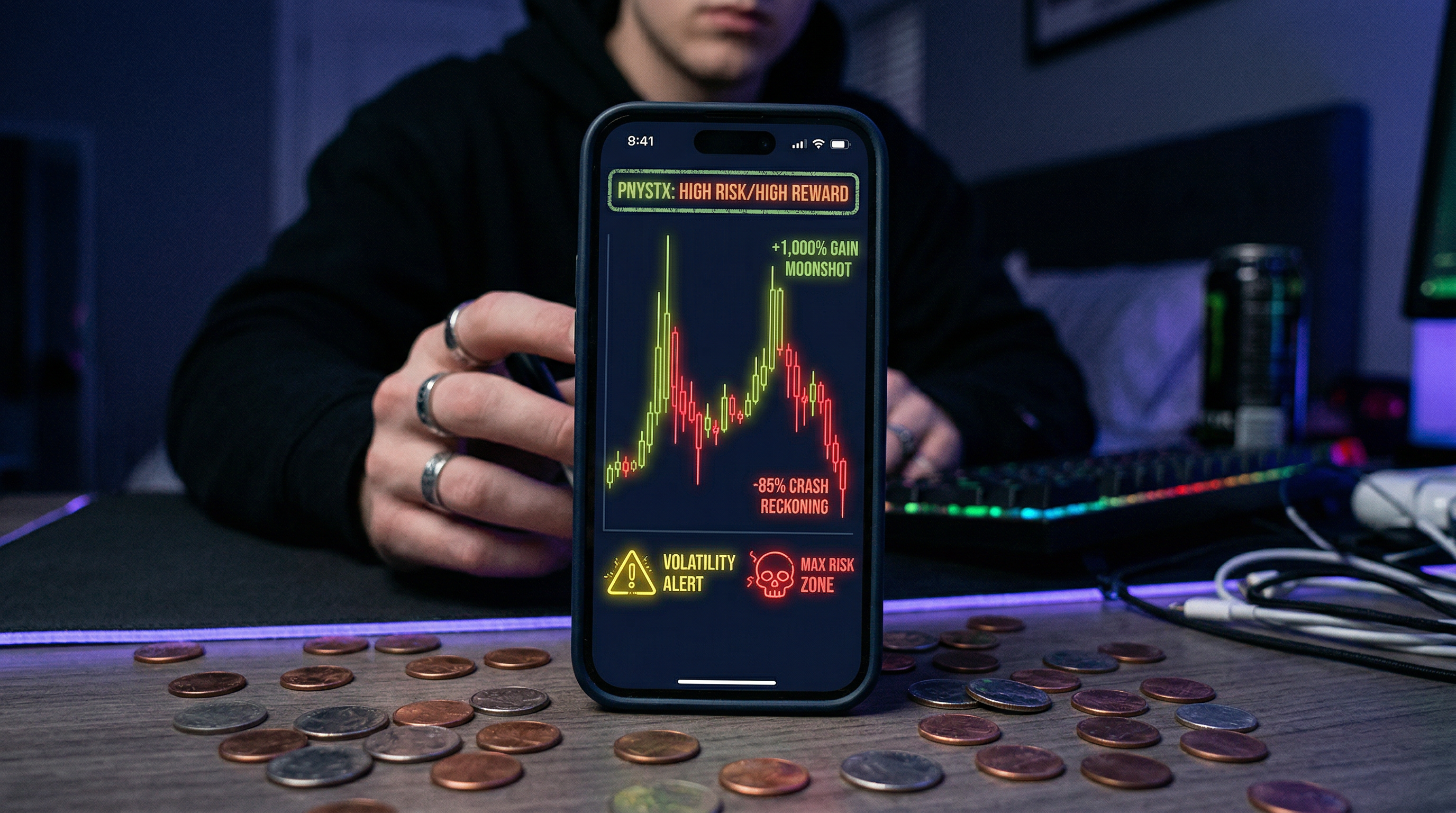
Las penny stocks son el tema más seductor y más peligroso en el trading para principiantes. La promesa de comprar algo a $0.50 y verlo ir a $5.00 suena como dinero fácil. La realidad es muy diferente — y aquí está la verdad que nadie te dice antes de que pierdas tu primer $500.
¿Qué Son las Penny Stocks?
Las penny stocks son generalmente acciones que cotizan por debajo de $5 por acción, aunque algunos definen el umbral en $1. La mayoría cotizan en mercados OTC (over-the-counter) fuera de las bolsas principales (NYSE, Nasdaq). Un pequeño número cotiza en las bolsas principales — estos son generalmente ex-acciones de gran capitalización que han caído hasta allí a través de un deterioro del negocio.
Por Qué Parecen Atractivas
- Los precios bajos hacen que comprar miles de acciones parezca asequible
- Los movimientos porcentuales grandes son más comunes — una acción de $0.50 que va a $1.00 es un 100% de ganancia
- Las historias de éxito (reales o exageradas) circulan en redes sociales
- La idea de «en el suelo del piso» de una empresa que podría «volver»
Las Realidades que Hacen las Penny Stocks Tan Peligrosas
La Liquidez es un Problema Mayor de lo que Crees
Muchas penny stocks tienen volúmenes de negociación extremadamente bajos. Puedes comprar 10,000 acciones, pero cuando quieres vender, no hay compradores. O el diferencial bid-ask es tan amplio que vender a un precio justo es imposible. Estás atrapado en una posición que no puedes salir limpiamente.
Los Requisitos de Información Son Mínimos
Las empresas en el mercado OTC no tienen los mismos requisitos de divulgación que las que cotizan en NYSE o Nasdaq. La información financiera a menudo está obsoleta, incompleta o directamente incorrecta. Sin información confiable, no puedes evaluar realmente lo que estás comprando.
La Manipulación del Mercado Es Endémica
Los esquemas «pump and dump» están desenfrenados en el espacio de penny stocks. Un coordinador compra grandes cantidades de acciones de baja capitalización de mercado, luego promueve agresivamente la acción a través de redes sociales, correo electrónico spam o boletines pagados para impulsar el precio. Cuando el precio sube, venden sus acciones a los nuevos compradores. La acción colapsa; los principiantes quedan atrapados con posiciones sin valor. La SEC persigue estos esquemas, pero la persecución llega mucho después de que el daño está hecho.
Las penny stocks no son una estrategia de trading — son la próxima etapa después de los casinos para las personas que buscan emociones en lugar de retornos. Si quieres movimientos grandes en porcentaje, opera las acciones de mediana capitalización adecuadas con catalizadores reales usando soporte/resistencia técnica. Practica identificar oportunidades de alta calidad en Traderise.
La Psicología Detrás del Atractivo de las Penny Stocks
Los principiantes gravitan hacia las penny stocks por varias razones psicológicas predecibles:
Ilusión de control: Con $500, puedes comprar 1,000 acciones de una penny stock de $0.50. Eso se siente como una posición real. Con el mismo dinero en AAPL, compras 2-3 acciones — que se siente insignificante. La ilusión de «muchas acciones» se siente como más oportunidad.
Sesgo de lotería: Las posibilidades de hacer 10x en AAPL en un año son extremadamente bajas. Las posibilidades en una penny stock parecen mejores — aunque la probabilidad de perder todo es mucho mayor también. Las personas sobreestiman las posibilidades de los grandes ganadores de las penny stocks.
Narrativa de «en el suelo»: Las acciones de $0.30 «no pueden» caer mucho más, ¿verdad? Incorrecto — pueden ir a cero, y muchas lo hacen. No hay un «suelo» garantizado para las penny stocks.
Fundamentos: Lo Que las Penny Stocks Generalmente Carecen
Las empresas de calidad tienen ingresos crecientes, productos que la gente realmente compra, equipos de gestión con historial y acceso a capital para financiar el crecimiento. La mayoría de las penny stocks carecen de la mayoría o de todo esto. Las excepciones — las penny stocks que se convierten en negocios legítimos — son tan raras que encontrar uno confiablemente es más difícil que simplemente invertir en el índice.
Practica Esta Estrategia Sin Riesgo
Traderise te permite operar en paper trading con $10,000 en fondos virtuales usando datos reales del mercado. Prueba cada estrategia de este artículo antes de arriesgar un solo dólar real.
Empieza a Operar en Paper Trading GratisQué Hacer en su Lugar
Si tienes $500 y quieres experiencia en el mercado de valores:
- ETFs de índice: SPY o QQQ te dan diversificación instantánea. El riesgo es real pero gestionable.
- Acciones de gran capitalización con acciones fraccionarias: Brókers como Traderise ofrecen acciones fraccionarias — puedes poseer una fracción de AAPL, MSFT o GOOGL con $500.
- Paper trading primero: Usa los $500 para aprender en Traderise con dinero virtual mientras construyes habilidades que puedes aplicar al mercado real.
El mercado de valores tiene mecanismos legítimos para construir riqueza. Las penny stocks rara vez son uno de ellos. Tu capital es demasiado valioso para ser desechado en esquemas que están diseñados para transferir dinero de principiantes a manipuladores.
Invierte tu Energía en el Mercado Real
Practica operando acciones de calidad, leyendo gráficos reales y gestionando riesgo en Traderise — las mismas habilidades que los operadores rentables usan, sin el riesgo de las penny stocks.
Prueba Traderise Gratis